
Dental Implants in Houston, TX
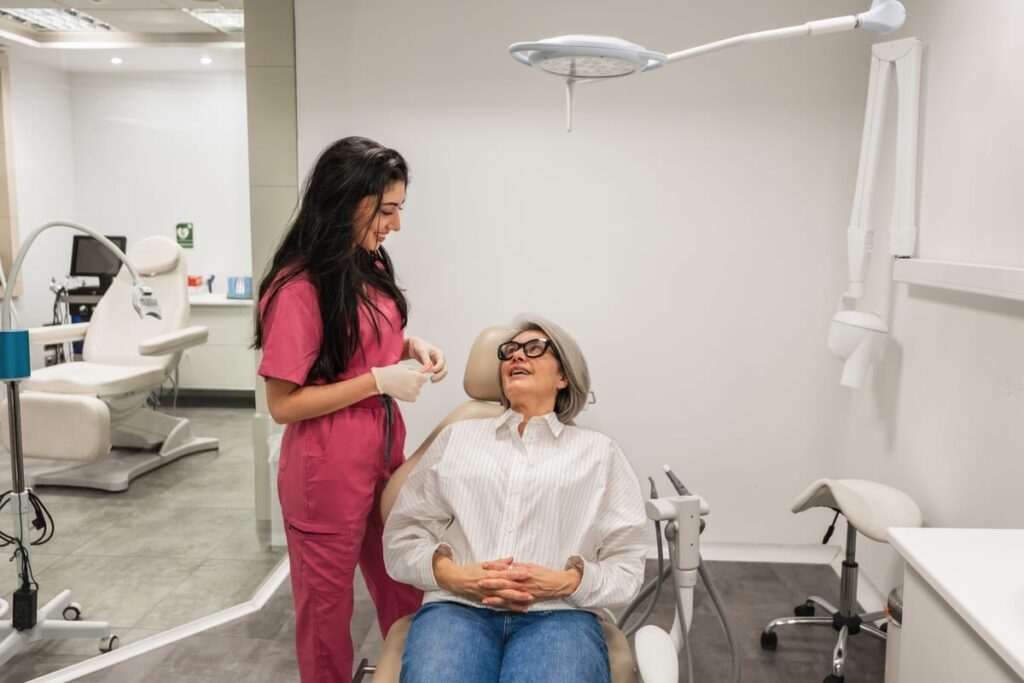
Many Houston patients don’t realize their jaw bone is shrinking until serious damage has already occurred. If you’ve been wondering, is your jaw bone disappearing — and do you need implants now in Houston — the answer may be closer than you think. Bone loss after tooth loss is silent, progressive, and surprisingly fast. Understanding the warning signs early can mean the difference between a straightforward implant and a complex bone graft.
At Adonia Dentistry Houston, Dr. Claudia Noufele sees this situation regularly. Patients often wait months or years before seeking help. By then, the jaw has already begun to collapse inward. This article walks through five clear signs that waiting is no longer an option.
Why Jaw Bone Loss Happens After Tooth Loss in Houston Patients
Your jaw bone stays strong because tooth roots stimulate it daily. Every bite, every chew sends pressure through the root into the surrounding bone. That pressure signals the bone to keep regenerating. When a tooth is lost, that signal disappears entirely.
Within the first year after extraction, the jaw can lose up to 25% of its bone volume in that area. After three years, significant structural changes become visible on X-rays. This is why timing matters so much with dental implants.
Dental implants work by replacing the missing root with a titanium post. That post mimics the stimulation a natural root provides. Without an implant, no other restoration stops bone loss from progressing.
Five Warning Signs You May Need Implants Now
These signs indicate that bone loss is likely already underway. Each one is a reason to schedule an evaluation sooner rather than later.
- Sunken or collapsed facial appearance: The face looks older or hollowed near the cheeks and jawline. This is a direct result of bone volume shrinking beneath the surface.
- Shifting or drifting teeth: Neighboring teeth tilt toward the gap left by a missing tooth. This misalignment causes bite problems and additional bone stress.
- Difficulty chewing on one side: Patients begin favoring one side to avoid discomfort. Over time, this uneven pressure wears down remaining teeth faster.
- Loose-fitting dentures or partials: If your denture used to fit well and now slips constantly, your jaw ridge has likely changed shape. Bone shrinkage alters the fit quickly.
- Persistent jaw pain or clicking: Bone loss changes how the jaw joint functions. Unusual clicking, soreness, or jaw fatigue can signal structural problems that implants may help address.
If you recognize two or more of these signs, don’t wait for your next routine checkup. A dedicated implant evaluation at Adonia Dentistry Houston can provide answers quickly.
How Long Is Too Long to Wait for Dental Implants in Houston?
This is one of the most common questions Dr. Noufele hears. The honest answer is that waiting even six months can complicate treatment. Bone loss happens faster than most people expect.
After significant bone loss, patients often need a bone grafting procedure before implant placement. This adds time, cost, and recovery to the overall process. Acting earlier avoids that extra step in many cases.
Younger bone also integrates with implants more efficiently. Patients in their 30s and 40s tend to heal faster than those in their 60s and 70s. However, implants remain highly successful across all adult age groups when bone volume is adequate.
Routine Dental Exams And Cleanings include X-rays that reveal early bone changes. These visits are often when Dr. Noufele first identifies patients who are losing bone density without realizing it. Catching this early is a significant advantage.
What the Implant Process Looks Like at Adonia Dentistry Houston
Understanding the process helps patients feel confident about moving forward. Dental implant treatment is predictable and well-established. Here is a general overview of what patients can expect.
- Initial consultation and imaging: A 3D cone beam scan evaluates bone volume and maps the placement site precisely.
- Treatment planning: Dr. Noufele reviews the imaging and discusses whether grafting is needed before implant placement.
- Implant placement: The titanium post is surgically placed into the jaw bone under local anesthesia. Most patients describe mild discomfort afterward, not during.
- Healing phase (osseointegration): The bone fuses with the implant over three to six months. This creates a stable, permanent foundation.
- Crown placement: A custom crown is attached to complete the restoration. The result looks, feels, and functions like a natural tooth.
For patients missing multiple teeth, implants can also anchor Dental Crowns And Bridges instead of single crowns. This approach restores several teeth using fewer implants, which is often more efficient and cost-effective.
Benefits of Choosing Implants Over Other Options
Not every tooth replacement option addresses bone loss. Dentures and traditional bridges sit on top of the gum or anchor to adjacent teeth. Neither replaces the root, so bone continues to shrink beneath them.
Here is why implants stand apart from other restoration options:
- They stimulate the jaw bone and prevent further bone loss.
- They do not require altering or crowning healthy neighboring teeth.
- They are permanent — no adhesives, no removable components.
- They restore full chewing function and bite strength.
- They look and feel indistinguishable from natural teeth.
- They can last decades with proper care and maintenance.
Implants are not just a cosmetic upgrade. They are a medical intervention that preserves your facial structure and long-term oral health. For Houston patients experiencing bone loss, they are often the most comprehensive solution available.
Take Action Before More Bone Is Lost in Houston
The urgency around dental implants is real and backed by science. Every month without treatment allows more bone to disappear. Once bone volume drops below a critical threshold, more complex procedures become necessary.
Dr. Claudia Noufele and the team at Adonia Dentistry Houston are experienced in evaluating bone health and designing implant treatment plans that match each patient’s unique anatomy. You don’t need to navigate this alone or guess whether you’re a candidate.
The first step is simply scheduling a consultation. An evaluation takes less than an hour and gives you a clear picture of your bone health and your options. Book Now to schedule your appointment with our team.
Frequently Asked Questions
How do I know if I have jaw bone loss without seeing a dentist?
Common visible signs include a sunken or aged appearance around the cheeks and jaw, shifting teeth, ill-fitting dentures, and difficulty chewing evenly. However, early bone loss is often invisible to the naked eye. An X-ray or 3D scan at Adonia Dentistry Houston is the most accurate way to assess your current bone volume.
Can jaw bone loss be reversed without dental implants?
Bone loss itself cannot be reversed naturally. However, a bone graft procedure can rebuild lost volume, creating a foundation for implant placement. In some cases, implants can be placed at the same time as the graft. Dr. Noufele will evaluate your specific situation and explain which approach is appropriate.
Are dental implants painful to get?
Most patients report that the procedure itself is not painful because it is performed under local anesthesia. Post-procedure soreness is typically mild and manageable with over-the-counter medication. Many patients return to normal activities within a day or two after placement.
How long do dental implants last in Houston patients?
With proper care, dental implants can last 20 years or more — and many last a lifetime. The crown attached to the implant may need replacement after 10 to 15 years due to normal wear. Regular cleanings and checkups at Adonia Dentistry Houston help maximize implant longevity.
What happens if I keep waiting and don’t get implants?
Continued waiting accelerates bone loss, increases the likelihood of needing bone grafting, and may cause neighboring teeth to shift or weaken. In advanced cases, the jaw structure changes enough to affect facial appearance significantly. Earlier treatment almost always leads to simpler, more successful outcomes.
